
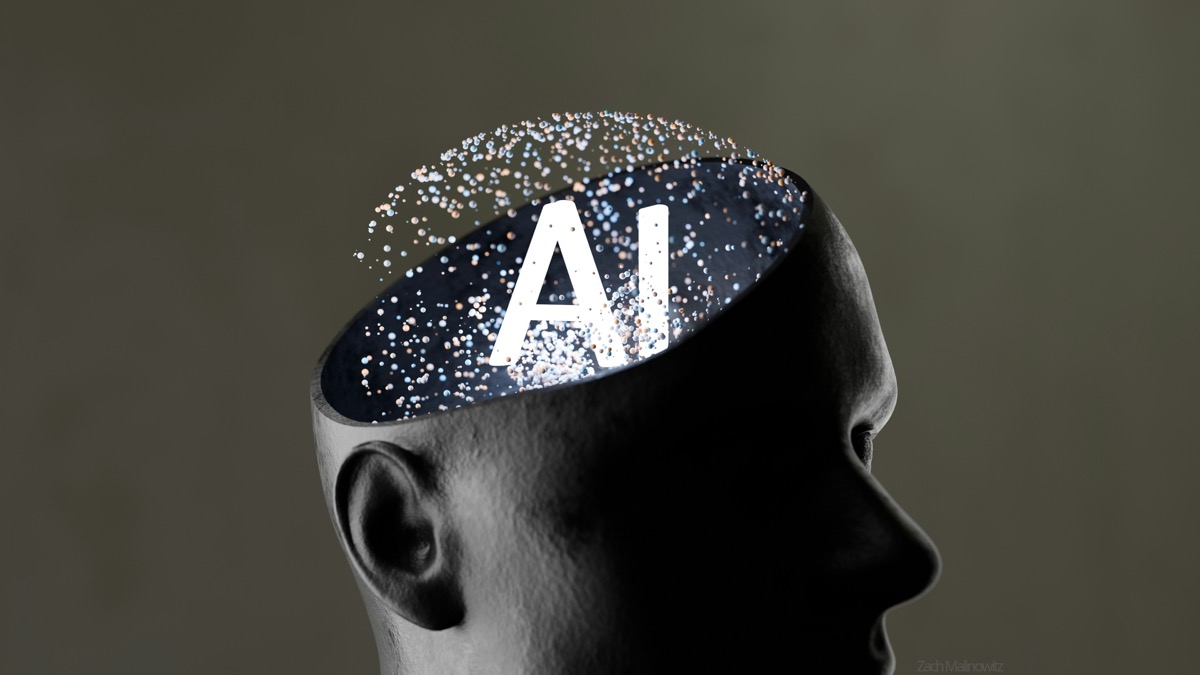
AI Won't Replace Developers — Developers Who Use AI Will Replace Those Who Don't

Okram Thomas Meitei
Director & Lead Instructor · 2 June 2026 · 7 min read
Let's start with what's real. The conversation about AI replacing developers has generated more anxiety than clarity. Headlines swing between 'AI will take every job' and 'nothing will change.' Neither is honest. I want to give you a grounded picture of what the data actually shows, what it means for someone starting out in tech in 2026, and what it means for how you should be learning right now.
What the data actually shows
The Stack Overflow Developer Survey 2025, which surveyed tens of thousands of developers worldwide, found that 84% of developers use or plan to use AI tools in their work. Among professional developers, 51% report using AI tools daily. Among early-career developers specifically, that number is even higher: 55.5% use AI tools daily, the highest share across any experience level.
52% of developers say AI has positively affected their productivity. These are real, measurable improvements. According to GitHub's research involving 4,800 developers, those using GitHub Copilot completed coding tasks 55% faster on average. Average task time dropped from 2 hours 41 minutes to 1 hour 11 minutes. These are not marginal gains.
That is the part of the story that gets amplified in ads for AI tools and in technology journalism. Here is the part that requires more honesty.
The entry-level reality is harder
While experienced developers are benefiting significantly from AI tools, the entry-level market has been disrupted in a real way. An analysis by Stack Overflow found that software developers aged 22-25 saw a nearly 20% employment decline from late 2022 to July 2025. Tech internship postings have fallen 30% since 2023, while applications for the same internships rose. 70% of hiring managers said in one survey that they believe AI can perform intern-level work.
The traditional entry point for a junior developer — bug fixes, small features, documentation, code reviews for simple changes — is precisely the work that AI tools handle most competently. Companies that used to hire two junior developers to do this work now hire one, and give that person AI tools.
This is the honest part that many tech education providers avoid saying out loud. The market has changed at the entry level. But here is what the same data also shows: the demand for developers who can build complete systems, make architectural decisions, and lead technical work has not declined. What has declined is demand for developers who can only do isolated routine tasks.
The skills that compound versus the skills that go stale
What distinguishes a developer who thrives in this environment from one who gets stuck comes down to depth of understanding. Specifically:
- System design — understanding how complex applications are architected, not just how to write individual functions
- Problem decomposition — taking a vague requirement and breaking it into something buildable
- Code review — reading and improving someone else's code, including AI-generated code, and catching the subtle errors
- Deep debugging — diagnosing problems that require understanding the underlying system, not just running a search
- Technical communication — explaining trade-offs clearly to a team, a manager, or a client
These are the skills that AI tools support, not replace. A developer who has them becomes significantly more productive with AI assistance. A developer who lacks them gets more confused, not more capable, when AI tools generate plausible-but-wrong code — which they do regularly.
The Stack Overflow survey found that 46% of developers actively distrust AI tool accuracy. The most common frustration, cited by 66% of respondents, is dealing with AI solutions that are almost correct but not quite. Recognising and fixing that gap is a skill that only develops through understanding systems, not through taking shortcuts past the fundamentals.
What this means if you are starting out
If you are entering tech in 2026, here is the honest advice: do not skip the fundamentals because AI can generate boilerplate for you. The developers who will be valuable five years from now are the ones who understand how and why the systems they build work — well enough to evaluate, correct, and improve whatever any AI tool gives them.
Use AI tools from day one of your learning. They are genuinely powerful and they accelerate certain kinds of work in ways that are worth understanding early. But use them as a teacher, not as a shortcut. When an AI generates code you don't understand, don't just paste it in. Ask it to explain the logic. Then write it yourself from scratch until you can reproduce it without the tool. That is how you build the understanding that makes you valuable in the long run.
The developers who are struggling in the current market are disproportionately the ones who optimised for speed of completion during their learning — who finished the most tutorials, got the most certificates, and can't explain why their code works when you ask them in an interview. The ones who are doing well are the ones who slowed down enough to actually understand.
The human skills that won't be automated
Beyond technical depth, there are dimensions of software development that remain entirely human. These are the skills that compound most reliably over a career and that no AI tool currently replaces in any meaningful sense:
- Understanding what a user actually needs, not just what they said they want
- Making judgment calls about what to build and what to leave out given real constraints
- Building trust with a team or a client through consistent, reliable work
- Taking responsibility for a product when it fails — and figuring out what to do next
- Asking the right questions before starting to code, when the problem isn't yet well-defined
These skills develop through experience with real projects, real stakeholders, and real consequences — not through completing isolated coding challenges on a platform. No AI tool teaches them because they are not fundamentally about code. They are about judgment, communication, and responsibility. Building them takes time and real-world exposure, which is why companies pay significantly more for developers who have them.
The honest conclusion
AI will not replace developers. It will automate the parts of the job that can be automated — and some of those parts happen to be the traditional entry point for beginners. The rest of the job — the parts that require judgment, responsibility, system thinking, and human understanding — those remain as human as they ever were.
The developers who will thrive are the ones who use AI as a multiplier on top of real skills, not as a replacement for developing them. Start building those real skills now. The window to build them is not closed — but it is narrower than it was two years ago, and it rewards people who start with seriousness rather than shortcuts.
If you want to understand what a learning environment that prepares you for this reality actually looks like, come talk to us. We offer a free counselling call — a real conversation about your situation, your goals, and what preparation would actually work for you.
Sources
Okram Thomas Meitei
Director & Lead Instructor
I started Optivoxx with one conviction: the young people of Manipur are every bit as capable as talent anywhere in the world — they've just never had the door opened for them.